
In the early planning stages for TRICUSO, a fieldwork task via the MV Pharos was scoped to measure surface ocean pCO2 in the Southern Ocean during a set period of time. However, when it came time to define the implementation plan, a decision was made to expand this opportunity and conduct observation through the majority of the project time as it would create a great data set of the surface ocean CO2 conditions all year round, serving as background information. This necessitated finding a pCO2 instrument.
The TRICUSO team at GEOMAR contacted several groups around the world and the search was ultimately successful as community colleagues from the National Oceanographic and Atmospheric Administration (NOAA) in the US offered the use of a spare instrument during the project time frame. With the instrument sourced and the required expertise needed for the installation, operation and ongoing data processing being provided by GEOMAR, the team was ready for next steps. Virtual meetings followed with the Pharos’ engineers in the Southern Ocean and the GEOMAR team to identify a good onboard location for the system, meeting an important set of requirements: close to the water intake, access to the ship’s GPS, and situated where water can be pumped through the instrument. All in all, a tricky task but the engineers of MV Pharos were very supportive and a place in the engine room was secured.
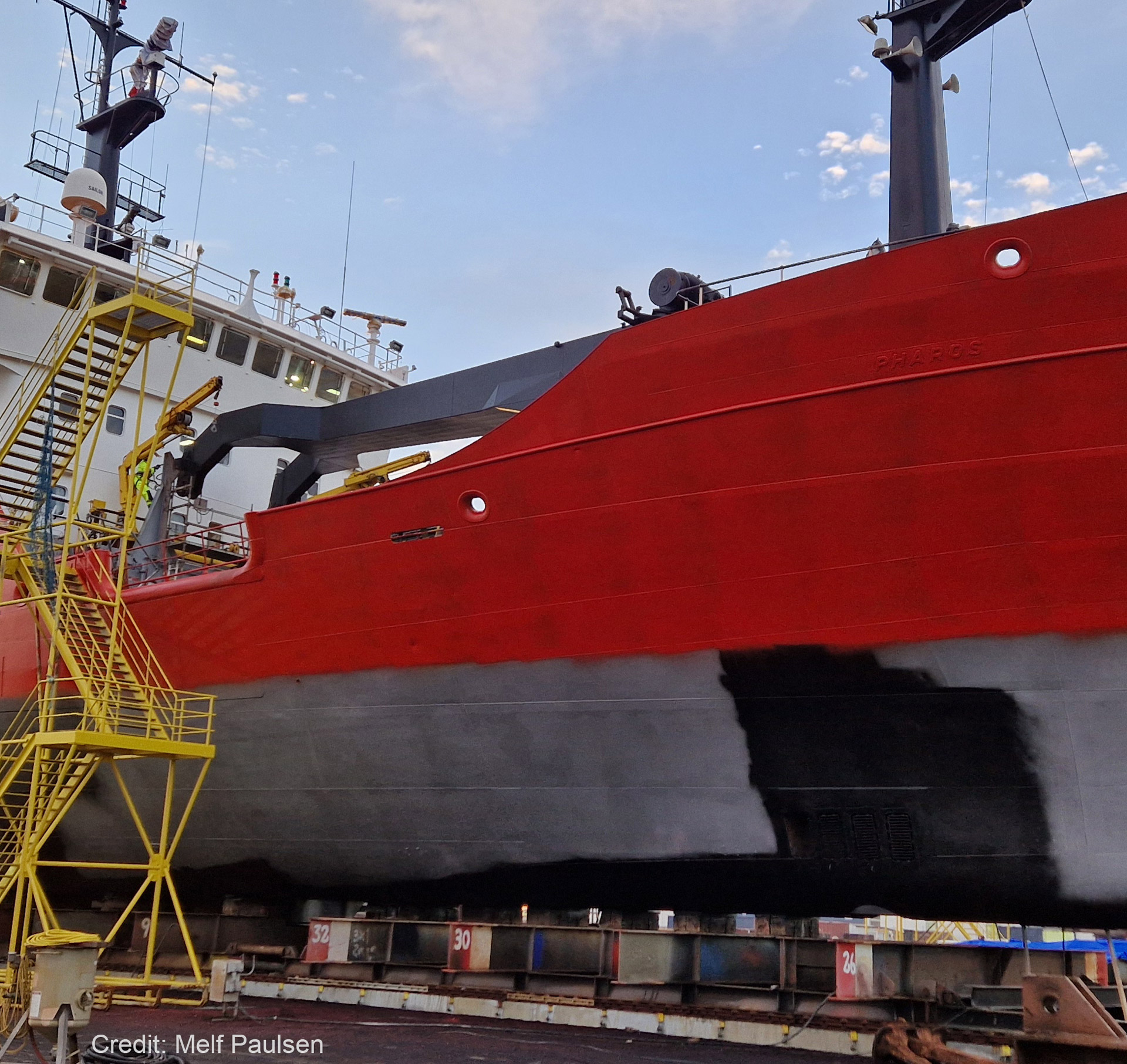
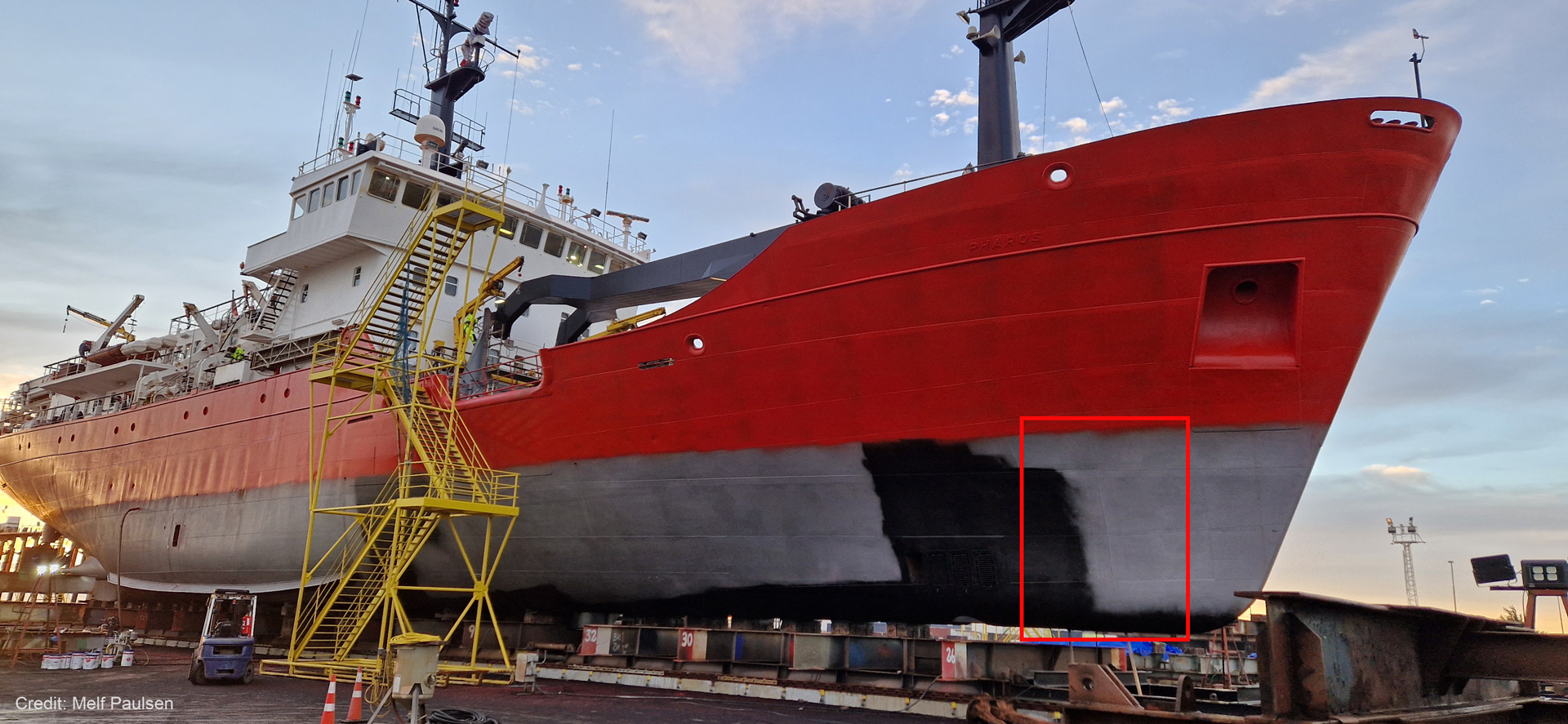
In May 2026, Melf Paulsen (GEOMAR) flew to Punta Arenas where the MV Pharos was in dry dock (Figure 1) to conduct the installation. Upon arrival, he discovered the original plan would not work and it was back to the drawing board, working with the crew. Fortunately, a new spot was found and solutions were worked out for all the requirements. But still, the installation had to wait as the crew needed to focus on docking time procedures and tasks. It was therefore decided to conduct the installation of the pCO2 system enroute when the Pharos left port for its scheduled journey to the Falkland Islands. With the great support of the crew, the system was installed in the ship’s engine room and connected to the seawater intake. As usual during installations, there were more challenges to face:
- The equilibrator (the heart of the instrument) was damaged during transportation. After careful inspection, it was determined that the damage would not impact the measurements, but the broken part will likely be replaced in the future.
- The gas bottles with reference gases were stuck in customs at the airport and could not be delivered to the ship before leaving Punta Arenas. They are being delivered to the Falkland Islands by a sister ship of MV Pharos.
- Diameters of some values were too small and restricted the water flow, but they will be changed by the crew in the near future.
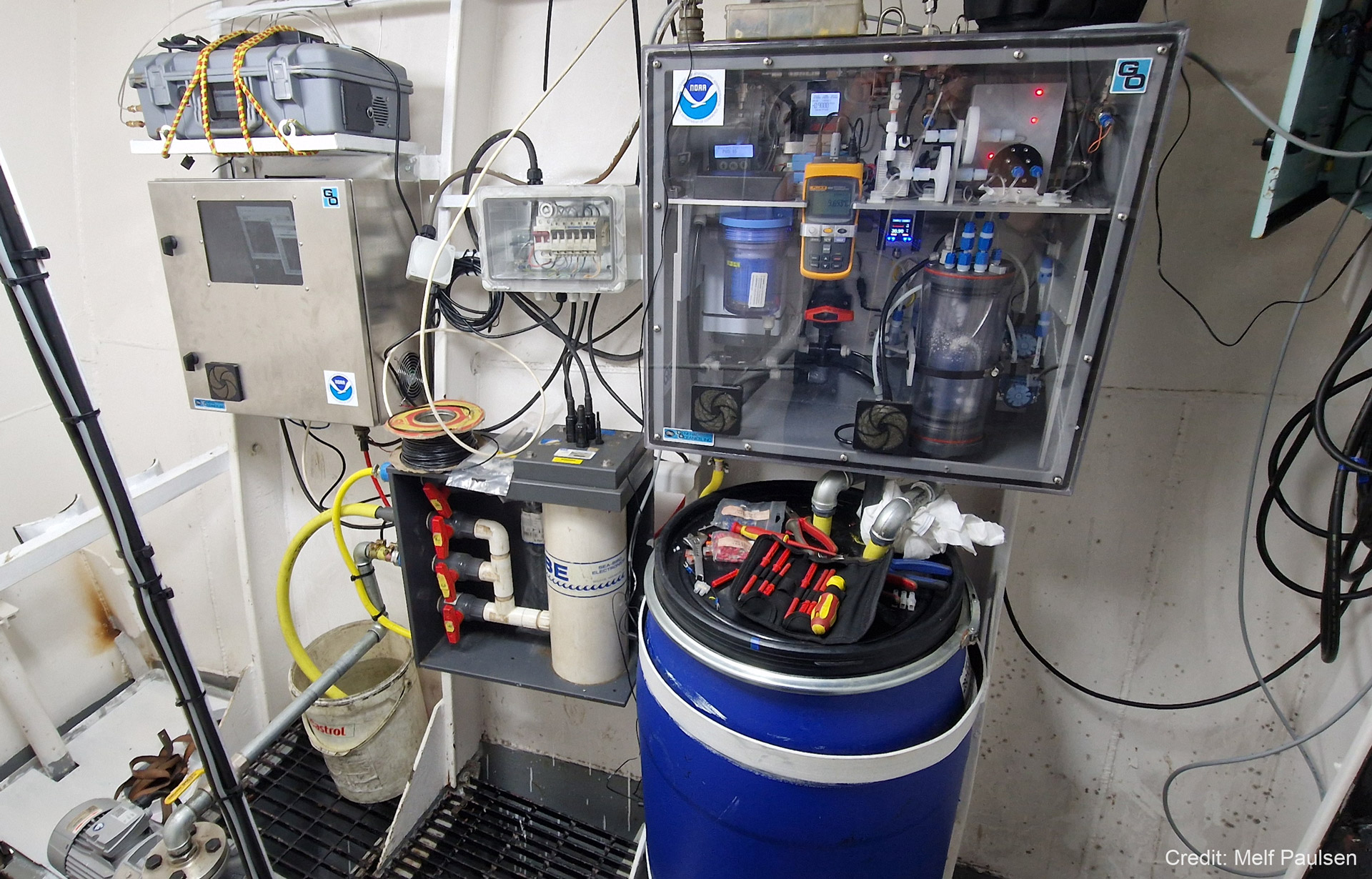
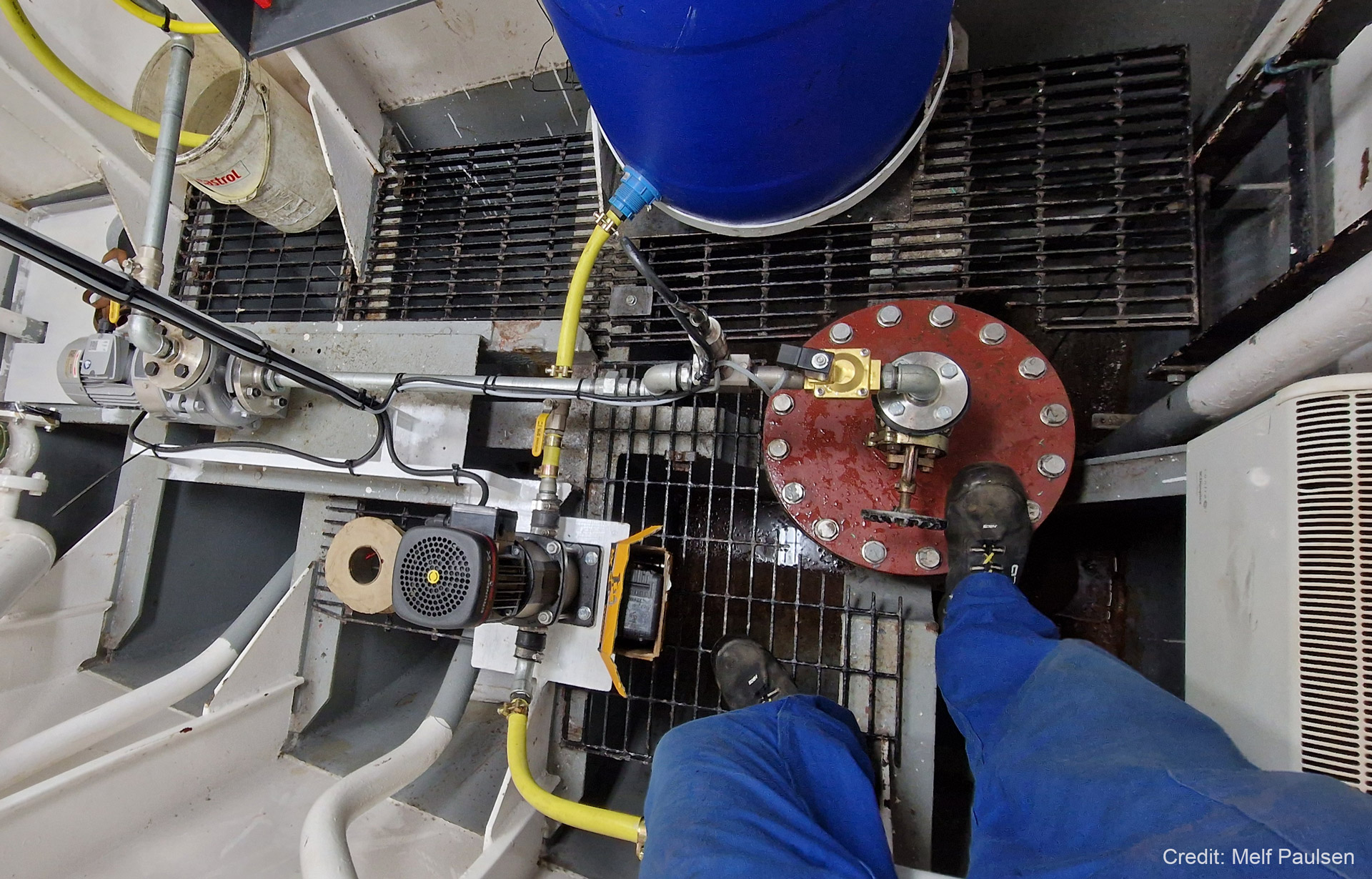
In summary, the installation went well and the system is nearly ready to go. Once the gases arrive at the Falkland Islands, they will be installed by colleagues from TRICUSO partner SAERI. The last adjustments to the system can be done remotely with the support from the crew on board.
We want to thank the crew for their ongoing support to make this happen and we are looking forward to recording exciting data in the TRICUSO study region.
Article prepared by Tobias Steinhoff (GEOMAR).


